Trading signals telegram: are they worth the subscription fee?
Trading signals telegram: are they worth the subscription fee?
His actual question was sharper than most: "Before I wire anything, walk me through what I should be checking." Smart framing. The honest answer is that paid Telegram signals sit in a weird middle ground — too accessible to ignore, too unregulated to trust by default, and too expensive to evaluate on vibes alone.
Here's how I'd break it down after months of evaluating providers across forex, crypto, and index channels, and after watching readers allocate $2,000 to $50,000 to channels that ranged from genuinely useful to quietly catastrophic.
The Verification Problem: Why Telegram's "History" Doesn't Add Up
The first thing any signal channel will show you is a wall of green screenshots. "Look, twenty-three wins in a row." "Here are last month's calls." It looks like an audit trail. It isn't.
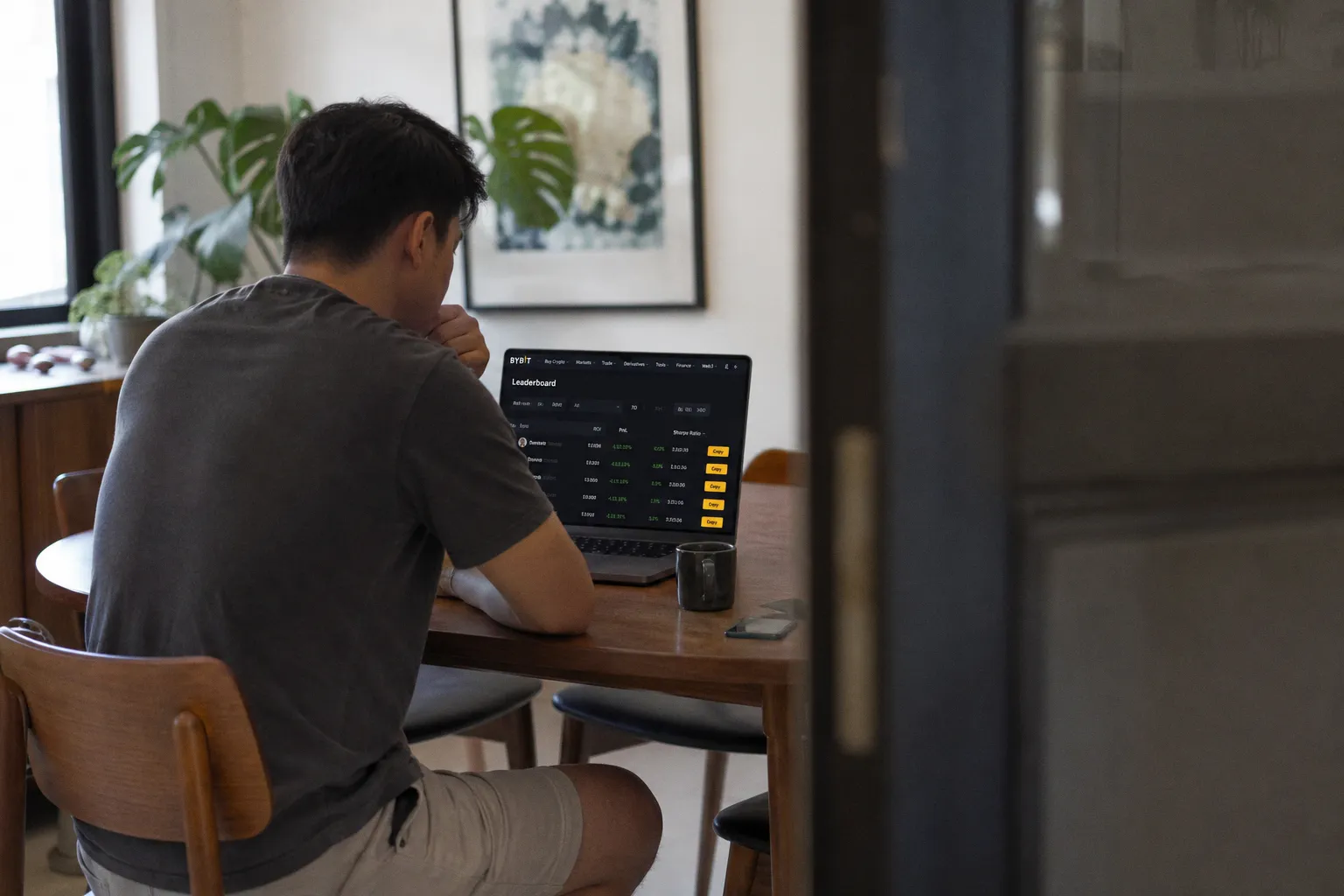
Telegram channels have two structural features any serious evaluator needs to internalize. First, there is no subscriber cap — a channel can scale to 200,000 members as easily as 200, which means follower count tells you nothing about quality. Second, and this is the kicker, channel administrators can delete posts after the fact, and those deletions propagate to every subscriber's view. A channel with a year of "history" might have a selectively curated history, with the losers quietly edited out and the winners pinned forward.
A Telegram channel's public feed is a marketing surface, not a verifiable ledger. Treat it the way you'd treat a hedge fund's pitch deck — interesting, but never proof.
This is survivorship bias weaponized. The provider doesn't have to fabricate any individual screenshot. They just have to fail to publish the losers. Survivorship in publishing is survivorship in performance: you only see what they let you see. The same dynamic plays out across the broader signal ecosystem, and it's exactly why regulated brokers and prop firms give essentially zero weight to screenshot-based track records.
The CFTC has flagged this exact pattern in its public warnings — providers promoting leveraged crypto futures, AI trading bots, and screenshot proof of 100%, 500%, or even 1,000% returns. The regulator isn't saying every channel runs that playbook. They're saying the structure of Telegram makes the playbook trivial to run, and the platform itself offers no native verification layer.
What Regulators Are Actually Telling You
If you want to know what institutional risk managers think of paid Telegram signals, the regulators have been unusually direct lately.
The SEC's investor alert from February 6, 2026 is unambiguous: never base investment decisions solely on social-media tips, and treat promises of high returns with little or no risk as a textbook fraud marker. The FCA went further on October 30, 2025, warning specifically about finfluencers pitching unrealistic returns to people who copy trades, use managed accounts, or pay for daily tips. In one documented case tied to that warning, more than 90,000 people lost roughly £75 million over four years through a single firm operating in this category. The FCA also confirmed it had issued 38 alerts against social-media accounts that may contain unlawful financial promotions, and that 20 finfluencers were being interviewed under caution.
A separate FCA case from 2022 involved a signal provider with more than 70,000 followers who was the subject of an alert and a takedown request. Q4 2022 alone produced 6,374 reports of potential unauthorized business and 531 alerts about unauthorized firms. These aren't theoretical risks. They're logged, public, regulator-tracked events.
Let me be clear about what this means and what it doesn't. These numbers don't prove that every Telegram channel is fraudulent. They do establish that the regulator's risk-weighted view of paid Telegram signals is dramatically lower than the marketing view. When 90,000 people lose £75 million through a single firm in this space, the right prior isn't "this is a normal product." It's "this category carries documented catastrophic loss," and you price that into your evaluation.
There's also a practical jurisdictional point. Investor.gov defines an investment adviser as a person or firm that, for compensation and as a business, provides advice about securities or issues reports or analyses regarding securities. Advisers generally must register with the SEC or state securities authorities. Whether a particular Telegram signal seller falls inside that definition depends on facts and jurisdiction — and in my experience, most paid channels sit in a gray zone the operator rarely clarifies.
The Hidden Math: What a $97/Month Subscription Actually Costs You
Let's run a real scenario. You open a $5,000 trading account, subscribe to a premium crypto signals channel at $97/month, and follow the calls for a quarter.
If the channel posts a 60% win rate on 90 signals, that's impressive in isolation. But you're not paying for gross signals. You're paying for whatever is left after the signal crosses spread, commission, slippage, financing on overnight leveraged positions, missed fills when you're not at the screen, and the subscription fee itself.
Here is roughly how that math stacks on a $5,000 account over a single quarter:
| Friction layer | Typical drag | Why most channels hide it |
|---|---|---|
| Spread + commission | 0.1–0.2% round-trip per trade | Listed as "trading costs," never modeled against gross return |
| Slippage on fast-market entries | 0.05–0.2% per trade | Worse during news events, when most signals fire |
| Missed fills (sleep, work, downtime) | 30–50% of posted signals not executed | Real-world capture rate almost never published |
| Subscription fee | $97/month = ~5.8% drag per quarter on a $5k account | Provider shows channel return, not your account return |
| Financing on leveraged overnight holds | 5–10% annualized on margin | Compounds quietly across weeks of "almost breakeven" trades |
| Taxes on realized gains | 10–37% depending on jurisdiction | Provider screenshots are pre-tax |
When you stack these, a channel showing 8% monthly gross can deliver anywhere from -2% to +4% net to your actual account over a quarter. The channel keeps posting its gross number. You absorb every layer of friction. And here's the equity-curve reality nobody wants to print on a flyer: a sequence of small net-positive months interrupted by one -8% drawdown wipes a much larger percentage of capital than the headline monthly return suggests, because you have to claw back from a smaller base.
Whatever return a Telegram channel claims, your realized return is that number minus spread, slippage, missed fills, financing, taxes, and the subscription itself. The gap between the two is where most signal "edge" actually lives — or dies.
FINRA's position on this is direct: projections based on hypothetical back-tested performance are not a reasonable basis for retail communications. A backtest alone is weaker evidence than a verifiable, net-of-cost live record. Most channels won't have the second, and they will absolutely lead with the first.
Telegram Alerts Aren't Regulated Copy Trading
This is a distinction casual readers consistently miss, and it matters operationally and legally.
The FCA's copy-trading guidance draws the line explicitly. When you manually read a Telegram alert, decide whether to act, and place the order yourself, that's a manual signal workflow. When you authorize a regulated copy-trading platform to turn each signal into an order without further intervention from you, that's automated copy trading — and the FCA classifies that as portfolio or investment management in many cases.
The two setups have very different accountability layers. Concretely:
- Regulated copy trading typically gives you pre-trade cost disclosure, a platform-aggregated track record you can audit, suitability or appropriateness checks, and a regulated entity on the other end with capital and conduct requirements.
- A Telegram alert gives you a username, a few months of selectively published entries, and a payment processor. The legal wrapper is not comparable, and treating them as comparable is one of the most expensive mistakes I see new copiers make.
For crypto specifically, where most premium Telegram signals operate, the verification problem is sharper still. Brokers and exchanges rarely publish platform-aggregated signal performance, because the signals aren't executed on the platform. You're effectively running an unverified strategy on top of an unverified execution path. For anyone evaluating crypto channels in particular, this independent checklist on crypto signal reliability walks through the verification categories the mainstream broker environment won't surface for you.
ESMA's March 30, 2023 supervisory briefing on copy trading gives you the right framework categories regardless of whether the product is regulated or not: marketing communications, costs and charges, product governance, suitability, remuneration, and qualifications of the copied trader. These are the lenses through which any signal provider — Telegram-based or otherwise — should be evaluated.
A Practitioner's Due Diligence Framework
After evaluating roughly sixty channels over the past year, here's the framework I actually run before allocating real money. It's not theoretical; it's the list I check off before I wire a cent.
1. Third-party verification. Is there a platform-level, audited track record — Myfxbook, FX Blue, broker-linked performance — or only screenshots the channel controls? If only the latter, the working assumption is unverified performance. A verified history tied to a real account is meaningfully stronger evidence than a Telegram screenshot, full stop.
2. Gross versus net disclosure. Did the provider publish results net of subscription, spread, slippage, and commission? If the only number on the page is "we made X%," treat it as gross and assume net is materially lower.
3. Drawdown profile. What is the max drawdown on the live record? What is the average losing streak? A 55% win rate with a 12% max drawdown is a fundamentally different product than a 70% win rate with a 60% max drawdown. Most promotional material buries the second number. Don't let it.
4. Regulatory status. Who is the legal entity? Are they registered with a relevant regulator for the markets they're advising on? If you can't find the answer in five minutes on the regulator's own public register, that absence is itself information.
5. Skin in the game. Is the provider compensated through subscriptions alone, or are they also running the strategy on a prop or personal account with real exposure? Skin in the game isn't a guarantee, but a provider with zero exposure to their own signals has weaker incentives than one trading their own capital alongside yours.
6. Personal friction test. Before paying anything, take the channel's free signals — most legitimate channels offer some — and execute them yourself for a month on a small account. Compare what the channel published to what you actually got. That gap is your true edge estimate. If it's positive, the subscription might pencil out. If it's negative or flat, no fee structure makes it worth it.
The Bottom Line
Paid Telegram signals aren't categorically a scam, and they aren't categorically worth the fee. They're an unverified, mostly unregulated, friction-heavy product whose published performance and your realized performance are rarely the same number. The £75 million lost by 90,000 people through a single firm operating in this space isn't a base case, but it is a documented tail, and the structural features of Telegram — editable history, unlimited subscriber counts, zero native verification — make that tail fatter than most channels will admit in their marketing copy.
If you do allocate to one, treat it the way you'd evaluate any unverified strategy: demand third-party verification of net-of-cost performance, model the subscription and friction drag before you wire anything, and don't let a glossy screenshot count as audit evidence. The signals that survive that filter are rare. The ones that don't are the ones being marketed hardest, and that's not a coincidence.