Forex trading signals: manual experts vs. algorithmic alerts
The copier receives orders, transmitted through a platform, scaled to account equity, filtered by margin rules, and filled at a price that may differ from the provider’s.
The relevant comparison is operational: how signals are generated, how much of the decision process can be inspected, what the live account history shows, and where the copy path can fail. A manual provider can run an unrepeatable discretionary process behind a clean-looking equity curve. An algorithmic provider can run a rule-based system with equally opaque parameters, execution overrides, and regime risk.
Neither label establishes an edge. The data available on the provider account does.
A forex signal is not a trade idea until the copier’s account has opened, sized, and closed the corresponding position.
The mechanics of execution: discretion versus code-based rules
Manual signal providers generate trading actions through human intervention. That may involve chart analysis, macroeconomic releases, order-flow inputs, session behavior, or a private ruleset applied with discretionary overrides. The execution record shows the output: entries, exits, modifications, holding times, and position sizes. It does not automatically reveal why a specific order was placed.
Algorithmic trading signals are produced by predefined logic. In a platform environment, that logic may be a trading robot, script, API-connected execution engine, or rule set running through a broker terminal. A cTrader cBot, for example, can analyze market conditions, open and modify positions, close trades, calculate position size, and apply stop loss, take profit, or trailing-stop logic.
The operational difference is real, but it is narrower than the marketing language suggests.
| Parameter | Manual signal provider | Algorithmic alert or provider |
|---|---|---|
| Signal generation | Human decision, potentially with fixed rules | Code-based conditions and predefined execution logic |
| Decision auditability | Usually limited to trade history and provider commentary | May include algo-use metrics, but source code and parameters are usually unavailable |
| Timing consistency | Can vary by availability, session, and response speed | Can be consistent if infrastructure, data feed, and execution routing remain stable |
| Override risk | High unless every discretionary intervention is documented | Still present: parameters, kill switches, code changes, and manual intervention can alter behavior |
| Primary failure mode | Judgment drift, delayed response, inconsistent risk sizing | Model decay, software errors, data-feed faults, latency, and parameter instability |
| What a copier can verify | Live trade history, drawdown, trade count, holding time, fees | The same metrics, plus partial indications of automation on some platforms |
A manual provider is not automatically adaptive. An automated forex alert system is not automatically rigid. Both descriptions are incomplete without account-level evidence.
A discretionary trader may use a strict checklist and execute with low variance. Another may vary lot size after a loss, move stops, average into adverse positions, or suspend a method without disclosure. The difference appears in the execution log before it appears in a biography.
Likewise, an algorithmic account may be fully systematic, partially automated, or manually supervised. The code can be changed after a profitable period. A provider can adjust symbol filters, risk multipliers, session windows, maximum spread limits, or stop logic. The historical equity curve remains visible while the underlying production configuration changes.
For a forex signal performance comparison, generation method should therefore be treated as a classification field, not a performance conclusion.
Platform transparency: decoding the automation label
Platform-level disclosure can reduce ambiguity, but it does not eliminate it.
MetaTrader 5 signal pages include an “Algo trading” metric that reports the share of deals executed by trading robots or scripts. A high percentage is useful evidence that the account is substantially automated. A low percentage indicates more manual interaction. Neither result explains the strategy.
A 100% algorithmic value does not disclose:
- the strategy’s entry logic or signal inputs;
- whether the provider changed parameters during the recorded period;
- the broker feed used for decision-making;
- the VPS location relative to the broker’s trade server;
- the maximum tolerated spread, slippage, or latency threshold;
- whether the system operates identically in current market conditions;
- whether the provider has parallel accounts running different versions of the same model.
A 0% or low automation value has similar limitations. It does not prove that a provider is making every decision manually. Orders may be prepared externally, executed through a trade copier, or driven by an alert workflow that does not register as robot-executed activity in the visible metric.
cTrader applies a broader definition at the strategy level: a provider’s strategy consists of all trading actions executed in the provider account, whether manual or automated. This is technically correct for copy-trading purposes. The copier receives account activity, not a philosophical distinction between trader and machine.
That is why profile language such as “expert trader,” “AI-powered,” “institutional algorithm,” or “hybrid execution” has low evidentiary value unless it can be tied to observable behavior.
The more useful questions are measurable:
1. How many completed trades are in the live record?
A small sample cannot characterize a trading approach. MetaTrader explicitly notes that a limited number of trades may reflect random profit rather than repeatable process. Forty trades with a high win rate are not equivalent to several hundred trades across different volatility conditions.
2. What is the account lifetime?
Account age in weeks matters because short-lived strategies can avoid exposure to less favorable market regimes. A provider that has only traded during one directional period has not demonstrated how the method behaves when trend, range, and volatility structure change.
3. What does the holding-time distribution show?
A system holding positions for seconds or minutes is highly sensitive to spread, latency, and execution routing. A swing strategy holding for days has different risks: gap exposure, swap costs, leverage consumption, and overnight volatility.
4. Is position sizing stable?
Review whether lot sizes scale proportionally with equity or jump after losses. Escalating position size, clustered entries, or repeated additions to losing trades can suppress realized loss frequency while increasing tail risk.
5. Does the equity curve match the trade log?
Smooth balance growth can conceal floating drawdown if losses remain open for extended periods. Equity drawdown and balance drawdown should be read together.
The automation percentage is a disclosure hint, not a strategy audit.
The reality of fx copy trading signals: the provider’s trade is not your trade
The decisive technical issue is not whether a trade was generated manually or algorithmically. It is whether the copier can reproduce it within acceptable deviation.
On cTrader Copy, copied volume follows an equity-to-equity formula:
Investor equity ÷ strategy-provider equity × provider trade volume
This means two copiers following the same provider can receive different lot sizes. The result depends on account equity at the time of the provider’s order, not on a fixed one-lot-for-one-lot relationship.
The formula is only the first layer. Trade replication can diverge because of:
- insufficient free margin in the investor account;
- lower leverage than the provider account;
- unavailable symbols or broker-specific instrument naming;
- minimum-lot and volume-step constraints;
- execution time between provider action and copier fill;
- different bid/ask prices, spreads, commissions, or liquidity;
- partial fills or rejected orders;
- investor account equity changing after deposits, withdrawals, or prior copied losses.
cTrader states directly that trades may fail to copy where the investor lacks sufficient funds, uses lower leverage, has inadequate free margin, or cannot access the relevant instrument. Price differences can also occur because trading conditions and execution timing are not identical.
This breaks a common assumption in signal-provider rankings: that a published return can be transferred to a subscriber account as a stable percentage. It cannot. A provider may close a profitable short position at one price while the copier receives a later fill after a spread expansion. For a low-frequency swing strategy, that deviation may be limited relative to the trade’s target. For a short-horizon system, a few points of slippage can materially alter expectancy.
The stop-loss and take-profit mechanics require extra attention. In cTrader Copy, the provider’s stop-loss and take-profit protections are not copied as independently resting orders to the investor account. Instead, the investor position closes when the provider’s corresponding closing signal is copied.
That distinction matters during fast price movement, connectivity disruption, or provider-side execution delay. The copier is dependent on the copied closure event, not simply protected by an identical stop order already sitting at the investor’s broker.
Manual signal providers can create additional transmission variance when alerts are delivered outside a native copy environment. A Telegram message, email, dashboard notification, or private chat alert introduces a human response interval. The user must interpret the symbol, direction, entry range, stop distance, target, and risk allocation. At that point, it is no longer direct copy trading. It is manual order replication with all associated timing and sizing error.
Algorithmic trading signals can eliminate the manual input stage, but only if the signal source, account, broker, API endpoint, and execution engine remain connected. Automation reduces one class of delay. It does not remove spread, liquidity, margin, or routing constraints.
Risk metrics: what the leaderboard does and does not measure
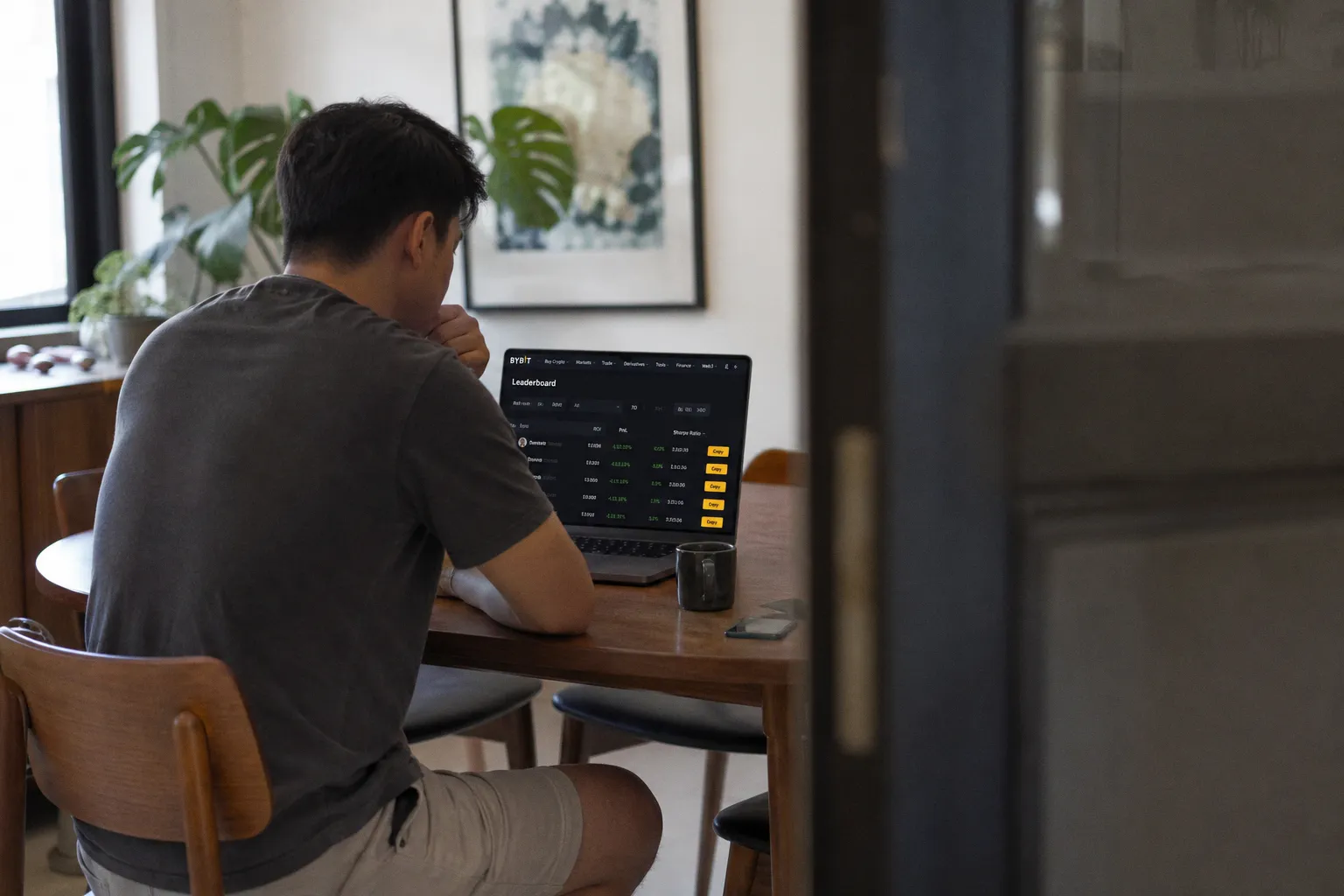
A leaderboard rank is a sorting function. It may reward return, gain, subscriber count, copied assets, recent activity, or a platform-defined score. It is not a complete risk report.
The minimum usable dataset for evaluating manual signal providers or automated forex alerts includes the following fields:
- Maximum drawdown: the largest decline from a local peak in balance or equity. MetaTrader defines maximum drawdown as a percentage and uses the worse of balance or equity drawdown. The equity figure is critical where open losses remain unresolved.
- Profit factor: gross profit divided by gross loss. It describes the relationship between winning and losing gross outcomes, not the stability of future returns.
- Trade count: a basic sample-size indicator. It cannot prove robustness, but a very low count provides little evidence.
- Account lifetime: the number of weeks over which the strategy has operated. This should be read alongside trade count; a two-year account with ten trades is not comparable to a two-year intraday account with thousands.
- Deposit load: on MetaTrader, margin divided by equity multiplied by 100. A high deposit load indicates more capital is tied to margin and less remains available to absorb adverse movement.
- Average holding time: a proxy for exposure profile and execution sensitivity.
- Expected slippage: where shown, a direct indication that the copier’s fills may not match the provider’s fills.
No single metric resolves the comparison. High profit factor with a high maximum deposit load may indicate a strategy that concentrates margin. A modest drawdown can be misleading if the account has not yet experienced a volatile period. A high win rate can coexist with negative asymmetry, where infrequent losses are much larger than typical gains.
The trade log should be inspected for structural behavior rather than surface return:
| Trade-log pattern | What it may indicate | Why it matters to a copier |
|---|---|---|
| Repeated additions to losing positions | Grid, averaging, or recovery logic | Margin use can accelerate while realized drawdown remains understated |
| Rare but extremely large loss | Tail-risk event or delayed stop discipline | One loss can erase a long sequence of small gains |
| Very short holding times | Scalping or latency-sensitive execution | Slippage and spread differences can materially change results |
| Large variation in lot size | Dynamic risk sizing or discretionary intervention | Copier exposure may not scale cleanly with published historical outcomes |
| Long open losses with few realized losing trades | Floating drawdown management | Balance statistics can look stronger than current equity risk |
| Sudden change in trade frequency | Strategy revision, volatility response, or operational interruption | Historical averages may no longer describe current behavior |
The cleanest comparison is not “manual versus algorithmic.” It is “observable, repeatable risk profile versus opaque, unstable risk profile.”
An automated provider with a stable live record, moderate deposit load, transparent execution history, and enough trades for the holding period can be easier to audit than a discretionary trader with polished commentary and sparse data. The reverse is equally possible.
Fees change the return distribution before the copier sees it
Signal fees are often evaluated as a percentage label rather than as a cash-flow mechanism. That is insufficient.
On cTrader Copy, provider compensation can include three components:
| Fee type | Stated cTrader Copy limit | Effect on the copier |
|---|---|---|
| Performance fee | Up to 40% of net profit | Reduces realized gains; typically calculated under a high-water-mark framework |
| Management fee | Up to 10% | Can be charged periodically regardless of strategy performance |
| Volume fee | Up to USD 10 per USD 1 million copied volume per side | Adds a trading-cost layer to each copied position |
The high-water-mark structure on performance fees prevents a provider from charging again on recovery of losses already incurred after a prior peak. It does not make a 40% fee small. If gross strategy gains are modest after spreads, commission, and slippage, the performance fee can remove a substantial fraction of the copier’s net result.
Management and volume fees require separate treatment. A management fee is not contingent on profitable trading. A volume fee is particularly material for high-turnover strategies because it compounds with the platform’s spread and commission structure. A provider can show an attractive gross curve while the copier receives a lower net curve after execution friction and fees.
For this reason, compare providers using the same return basis wherever possible:
- provider return before platform compensation;
- estimated copier return after performance, management, and volume fees;
- likely spread and commission differential at the copier’s broker;
- expected slippage for the strategy’s holding period;
- drawdown measured on equity, not only closed balance.
A strategy charging performance fees can still be economically rational if it maintains a durable edge after all copy costs. The fee schedule is not disqualifying by itself. But gross leaderboard performance is not the number that funds a copier account.
Regulatory reality and the guaranteed-return problem
A signal seller’s marketing language should be separated from its legal status.
In the United States, the National Futures Association states that a commodity trading advisor may include an individual or organization compensated for advising on retail off-exchange forex contracts, including advice distributed through written publications or other media. Whether a particular provider must register depends on the jurisdiction, compensation arrangement, client relationship, communications, and any applicable exemption.
A public profile, a large subscriber count, or a top leaderboard position does not establish registration, licensing, exemption, or regulatory oversight. Those are status-specific claims requiring a check against the relevant registry and the precise operating model.
The CFTC has also warned that online forex fraud can involve offers of “secret” signals, strategies, and software trading for customers. Its stated retail forex loss statistic is direct: two out of three retail forex traders lose money each quarter.
That figure does not prove that every signal provider is fraudulent or that every copy strategy fails. It does establish the correct baseline. Forex signal performance should be treated as uncertain, execution-dependent, and exposed to leverage risk.
The highest-risk claims are operationally easy to identify:
- fixed monthly return targets;
- “guaranteed” win rates;
- no-drawdown or low-risk assertions without verified equity history;
- screenshots in place of live platform statistics;
- backtest results presented as if they were live execution;
- social-media testimonials used instead of a complete trade record;
- claims that a bot is inherently safer because it has no emotions;
- claims that a human expert can always adapt to news or market regimes.
None of these statements audits the strategy. They bypass the data required to evaluate it.
The verdict: select the account process, not the label
Manual experts and algorithmic alerts should be compared as signal-production systems connected to an execution pipeline. The provider type is secondary.
A manual provider is preferable only where the live record shows a defined and stable risk process, sufficient account history, sensible margin use, and trade behavior that a copier can realistically reproduce. The provider’s narrative adds little if the execution data is weak.
An algorithmic provider is preferable only where the account history shows that its edge survives actual fills, fees, drawdowns, and changing volatility. An automation label, a robot name, or a high algo-trading percentage is not a substitute for that evidence.
The practical ranking order is straightforward:
1. Verify that the record is live and long enough to be meaningful.
2. Measure equity drawdown, deposit load, trade count, and holding-time profile.
3. Inspect the trade log for martingale, grid, averaging, or hidden floating-loss behavior.
4. Model copy divergence from leverage, lot sizing, spreads, and slippage.
5. Calculate returns after every provider and platform fee.
6. Treat regulatory claims and performance promises as separate items requiring independent verification.
The distinction between manual signal providers and algorithmic trading signals is useful for understanding operational risk. It is not a ranking criterion by itself. The only defensible conclusion comes from the execution record, the copy mechanics, and the risk that remains after the provider’s published return has been translated into the copier’s account.