Cryptocurrency trading signals: are paid groups worth the fee?
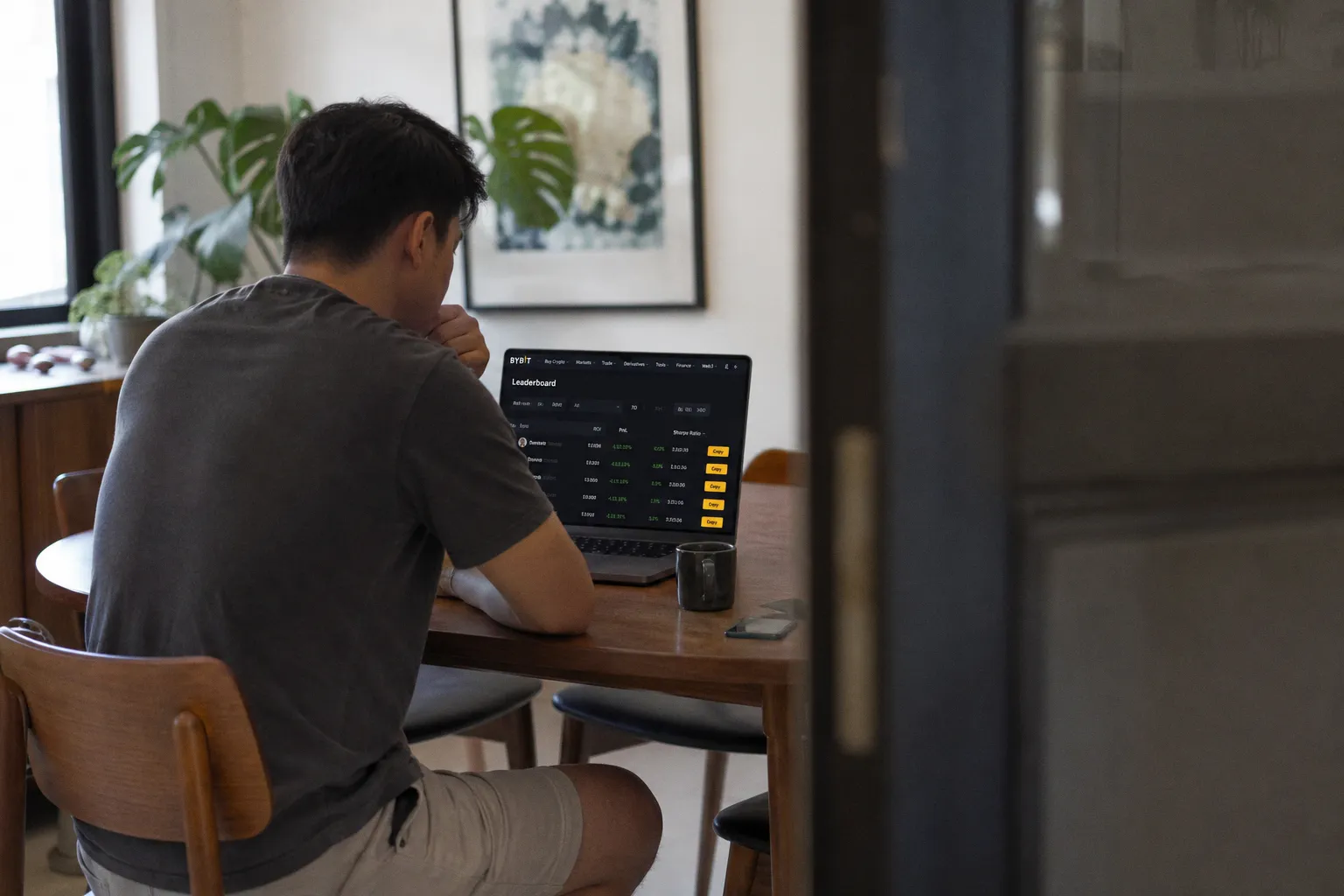
The trader had paid, ridden three losing trades, doubled his position on the fourth in classic revenge trading fashion, and was now down 40% of the deposit he'd allocated to "learning the strategy." He asked the only question that actually matters: was the subscription worth the fee?
Here's the honest answer. Based on the latest regulator data, that question is almost impossible to answer in the abstract. The problem isn't whether paid cryptocurrency trading signals can work — some clearly can. The problem is that the gap between what a signal provider claims and what a retail subscriber actually receives has become so wide, so polluted with marketing noise, and so vulnerable to outright fraud that paying for a subscription without doing the homework is closer to gambling than investing. Let me show you what I mean.
The 2025 scam landscape: what the regulators are actually saying
The numbers I want you to sit with come from the Federal Trade Commission, the CFTC, and the SEC. Not influencer threads. Not crypto Twitter. Regulators.
In 2025, Americans reported roughly $2.1 billion in losses from scams that originated on social media. Of that total, investment-related scams accounted for about $1.1 billion — more than half. Among consumers who lost money and reported a contact method, social media was the channel in roughly 28% of cases. That share has been climbing for years, and it puts social platforms in the same conversation as the historically dominant fraud channels — phone calls, email, and in-person contact — as one of the leading vectors where investment scams now originate.
The CFTC has been particularly blunt. The agency warns consumers not to buy digital coins or tokens based on a single tip, especially one received through social media, and it explicitly states that no investment or trading strategy can guarantee profits or eliminate the risk of loss. In one documented example, a crypto pump-and-dump chat group had thousands of members and the buy-and-sell cycle was completed in less than eight minutes, with the organizers exiting first. Cases like that aren't unusual — the CFTC's enforcement docket includes repeated examples of large, fast-moving chat groups where the operators trade ahead of the membership.
If the provider is out before you get the alert, you are not the customer. You are the exit liquidity.
Then on December 22, 2025, the SEC put out an Investor Alert specifically calling out investment group chats as gateways to fraud. The alert describes exactly the playbook I keep seeing in the wild: impersonators posing as experts, supposed AI-generated signals, screenshots of "successful trades" that may or may not be real, and links to fraudulent crypto-asset trading platforms. None of this is theoretical. It's the agency's reading of how the ecosystem currently operates, and it tracks closely with what the FTC and CFTC are seeing in their own complaint data.
Why screenshots, follower counts, and win rates fail as performance metrics
Now let's talk about the metrics signal providers actually use to sell you. Screenshots of winning trades. Follower counts in the tens of thousands. A win rate that hovers around 80 or 90%. None of this survives contact with a working definition of performance.
A screenshot is a single trade, lifted from context. It tells you nothing about entry rules, exit rules, position sizing, leverage, the trade that came before it, or the seven losses that preceded the win. Survivorship bias is baked in — the only trades shown are the ones that survived. If I screenshot every winning trade I take for the next three months, I can publish an equity curve that looks like a slot machine. The technique is older than paid signal groups themselves.
Follower counts suffer from the same problem in reverse. A large group can be evidence of marketing reach, not of performance quality. The CFTC's example chat had thousands of members, and many of the cases the agency has pursued involve groups of similar size. A big group is a distribution channel. It tells you nothing about the edge.
Win rate is the worst offender of the three. A 90% win rate on ten one-dollar bets with a 1:100 risk-reward ratio is a money-losing strategy. A 40% win rate with disciplined entries, sensible stops, and a 3:1 reward-to-risk structure is a fortune. Win rate without context — sample size, payoff structure, average winner versus average loser, maximum drawdown — is marketing copy, not analytics. And almost no paid channel publishes the unfriendly half of those numbers.
What you actually want is an equity curve with full trade history, ideally verifiable through a third party. Drawdown periods. The strategy's behavior during chop. Whether the provider used leverage, and how much. Whether the curve is net of subscription cost, exchange fees, slippage, and funding. If a provider can't or won't show you this, the answer to "are subscription trading signals worth the fee" is no — because you have nothing to evaluate.
Hidden incentives: who actually pays the signal provider
This is the part most retail traders skip, and it's the part that determines whether the recommendations are honest.
Signal providers don't only earn from subscriber fees. Many earn from affiliate kickbacks when you sign up for the exchange they recommend. Some receive token allocations — free or discounted tokens from the projects they then promote to their group. Others run paid promotions disguised as analysis. The FTC's own guidance from November 2019 makes the disclosure rules explicit: social-media endorsers must clearly disclose material connections to a brand, including financial relationships, free or discounted products, employment, family, or personal relationships, and the disclosure should be hard to miss and placed with the endorsement.
In practice, that disclosure is often buried in a pinned post, an emoji-laden disclaimer line, or simply omitted. The result is a recommendation that looks like analysis but is actually a paid placement. The subscriber thinks he's getting an edge. He's actually the distribution arm of someone else's marketing budget.
A signal provider with no skin in the game is a content creator. You are the product they sell to their real customers.
Then there's the front-running question — does the provider trade the signal before sending it to the group? With a fast-moving Telegram channel and an alert-based strategy, even a thirty-second head start is enormous. The provider's fills are better. Your fills are worse. You both trade "the same idea," but the economics are completely different. This isn't hypothetical. It's the structural advantage any insider has over a paying subscriber, and the reason every serious provider should publish both their own fills and the timestamp of when alerts were sent.
One more layer is worth naming: some signal providers are paid by the exchange itself in a more direct relationship. A "partner" channel that pushes a specific platform's order flow, API integration, or copy-trading product has an alignment problem that goes beyond a single affiliate link. The signal becomes a feature of the exchange's funnel, and the subscriber becomes the funnel's output. None of that requires malice on the provider's part — it just requires an incentive structure that points away from the subscriber's interest.
Regulatory red flags: what regulated advice actually looks like
The single most consistent red flag I see in paid crypto signal groups is the promise of high returns with little or no risk. The SEC has been explicit on this: a promise of high returns with little or no risk is a classic sign of investment fraud. Every investment carries risk, and higher potential returns generally entail higher risk. When a provider's pitch doesn't acknowledge risk at all — when the marketing is pure upside, when drawdowns are described as "temporary" or "part of the system" — you're looking at a fraud pattern, not a strategy.
The second red flag is the vocabulary. Words like "analyst," "master trader," "club," "VIP," and "AI signals" carry no regulatory weight. They are branding choices. Whether someone who gives trading advice is legally required to register depends on the instruments they are recommending (futures, options on futures, retail off-exchange forex, swaps, securities), the jurisdiction they are operating in, the audience they are reaching, how they are being compensated, and whether they hold themselves out as a professional advisor. Under U.S. federal rules, the Commodity Futures Trading Commission and the National Futures Association oversee CTAs — Commodity Trading Advisors — who, for compensation or profit, advise others about trading in those regulated instruments. The NFA recognizes a set of exemptions that may apply in specific circumstances, including advice provided to a small number of clients over a defined period and certain impersonal advisory relationships.
Registration isn't free or cheap. Entities that operate as CTAs have paid regulatory fees — application fees, ongoing NFA membership dues, and the compliance overhead that comes with disclosure obligations, reporting, and enforceable standards. A provider who has chosen to operate at scale, solicit a paying audience, and recommend specific trades on regulated instruments has either been through some version of that process or is operating within an exemption that fits their facts. That doesn't automatically make them honest. It does tell you something about whether they have willingly submitted to the regulatory perimeter or have chosen to stay outside it.
Caveats matter here, because the regulatory map isn't one-size-fits-all. A provider advising on crypto spot trades from an offshore jurisdiction to a global audience under a token-based compensation model sits in a different legal position than a U.S.-domiciled CTA advising a U.S. client on E-mini futures for a flat retainer. The same language — "I recommend trades for a fee" — can trigger very different obligations depending on those facts. Anyone who tells you the threshold is simple is oversimplifying, and any retail subscriber trying to evaluate a provider should treat the regulatory question as one variable among several, not as a clean yes/no gate.
So is the subscription worth the fee?
Here's where I land after looking at this for years, and after watching the FTC, CFTC, and SEC data move in one direction.
The question "are paid crypto signal groups worth the cost" assumes there's a universal answer. There isn't. The honest framework looks like this:
| What you should demand | Why it matters | Red flag if missing |
|---|---|---|
| Audited or third-party-verified trade history | Screenshots are cherry-picked by definition | "Trust me" equity curve |
| Net-of-fee, net-of-slippage returns | Subscription cost and execution drag are real | Gross returns only |
| Maximum drawdown and recovery time | This is your actual pain as a copier | Drawdown described as "rare" |
| Sample size over 200+ trades | Anything smaller is noise | "Last 30 days" highlights |
| Disclosure of all conflicts | Affiliate, token, sponsorship income | Vague "partnerships" |
| Provider's own fills and timestamps | Tests for front-running | Claims of "instant alerts" with no audit trail |
| Clear legal posture | Where they're registered, what instruments they cover, what exemption they rely on | "We're just a community" |
If a paid cryptocurrency trading signal provider can clear that list, the premium signal provider value might actually be justified. If they can't clear half of it, the fee is a donation to someone else's marketing budget — and in the worst case, a contribution to the $1.1 billion in 2025 social-media investment scam losses.
The cheapest signal you'll ever buy is the one you didn't purchase because the data didn't justify it.
What I'd actually recommend, if you're new to this space, is simpler than any VIP channel. Open a small account. Track your own crypto signal group performance expectations for three months. Publish your own equity curve. Then compare what a paid group offers against what you can generate yourself. Most traders who run that experiment find out two things: their edge is closer than they thought, and the paid groups cost more than they imagined once you account for the bad fills, the missed trades, and the months you paid for nothing.
The signal industry isn't going anywhere. The regulators are documenting its worst actors faster than ever. The middle — the honest providers with verifiable results — exists, but it's smaller than Telegram would have you believe. Your job is to find that middle, demand the receipts, and walk away from anything that smells like the playbook the SEC described in December 2025. The fee is only worth it when the evidence forces you to conclude it is — and until then, the most honest edge you have is the one you build yourself.