Crypto trading signals: Telegram channels vs copy trading

The market still uses the same phrase — crypto trading signals — for two different systems. One is a message distribution channel: entry, stop, target, leverage, and sometimes a screenshot. The other is an execution network: a master account routes trades through exchange APIs, and follower accounts replicate them automatically. The first depends on manual action. The second depends on infrastructure.
Signal delivery has moved from chat messages to execution rails
Telegram signal groups are distribution systems. They transmit instructions. They do not execute trades. A provider posts an alert, usually in a format similar to:
- Pair: BTC/USDT or ETH/USDT
- Direction: long or short
- Entry range
- Stop-loss
- Take-profit levels
- Suggested leverage
- Exchange preference
- Risk comment, if present
That is not a trading system. It is a message payload. The user still has to parse the alert, open the exchange, select the pair, choose margin mode, set leverage, enter order size, configure stop and take-profit, and submit the order. Every step adds operational latency.
Copy trading platforms compress that chain. On platforms such as eToro, Bybit, and Binance, the copy engine connects the master trader’s account activity to follower accounts through internal routing and exchange APIs. When the master trader opens, modifies, or closes a position, the follower account can replicate the action without manual intervention.
That distinction matters most in crypto because the market does not close. A Telegram alert posted at 02:17 UTC is still a manual task. An API-linked copy system can execute continuously, including during low-liquidity hours and high-volatility breaks.
A Telegram signal is an instruction. A copy trade is an execution event. Treating them as equivalent is a measurement error.
The practical difference is visible in the failure modes. Telegram signals fail through unread messages, delayed taps, incorrect pair selection, wrong leverage, missed stop placement, partial entries, or emotional override. Copy trading fails through platform latency, API errors, slippage, allocation mismatch, liquidity constraints, or master-trader losses. Both systems carry risk. Only one system removes the user from the execution loop.
Manual alerts create non-standard fills
In a manual Telegram workflow, two subscribers can receive the same signal and produce materially different trades. One enters at the posted price. Another enters 40 basis points worse. A third misses the entry range and chases the move. A fourth sets 20x leverage instead of 10x. The provider may later publish a “TP1 hit” message, but that does not prove that subscribers received the same fill.
This is the core measurement defect in Telegram crypto signals. The signal record is not the subscriber execution record.
A copy trading platform does not eliminate slippage, but it standardizes the execution process. Followers still may receive different fills from the master trader depending on liquidity, order type, follower size, server routing, and exchange conditions. But the system records the trade path. The platform can show entry price, exit price, ROI, drawdown, win rate, and trade history based on platform-verified data rather than screenshots.
The difference is not trust. It is instrumentation.
The economics are different: subscription revenue vs profit share
Telegram signal providers typically monetize before performance is known. Common models include monthly subscriptions, lifetime access fees, private “VIP” channels, and exchange affiliate revenue. In the affiliate model, users are pushed toward a specific exchange through referral links, and the signal provider earns from trading activity.
That structure can produce a weak incentive match. A subscription channel earns if users keep paying. An affiliate-based channel earns if users keep trading. Neither model automatically rewards net profitable execution.
Copy trading platforms increasingly use performance-linked compensation. Master traders often receive a profit share from followers, commonly in the 5% to 15% range of follower net profits. The exact mechanics vary by platform and program, but the incentive is structurally different: the master trader earns more when followers generate realized profits.
That does not make copy trading safe. A master trader can still over-leverage, increase risk after a drawdown, change strategy, or benefit from past performance that does not persist. But profit sharing at least links compensation to outcome rather than access.
| Parameter | Telegram signal channels | Copy trading platforms |
|---|---|---|
| Primary delivery mechanism | Chat alert | API-linked trade replication |
| Execution | 100% manual for the subscriber | Automated after allocation setup |
| Typical provider compensation | Subscription, lifetime fee, affiliate revenue | Profit share, often 5% to 15% of follower net profits |
| Performance record | Often screenshots, message history, selective posting | Platform-verified ROI, drawdown, win rate, trade history |
| Slippage control | User-dependent; can range from negligible to complete missed entry | Platform-dependent; still present but logged |
| Operational coverage | Depends on user availability | 24/7 automated execution |
| Fraud surface | High due to weak verification and easy channel creation | Lower on execution data, still present in strategy risk and marketing |
| Main technical bottleneck | Human latency | Routing, liquidity, allocation, and platform latency |
The compensation model also changes the type of provider that can scale. A Telegram channel can scale through marketing, influencer reach, and urgency mechanics. A copy trading creator has to survive on a leaderboard where drawdown and ROI are visible, at least within the platform’s reporting framework.
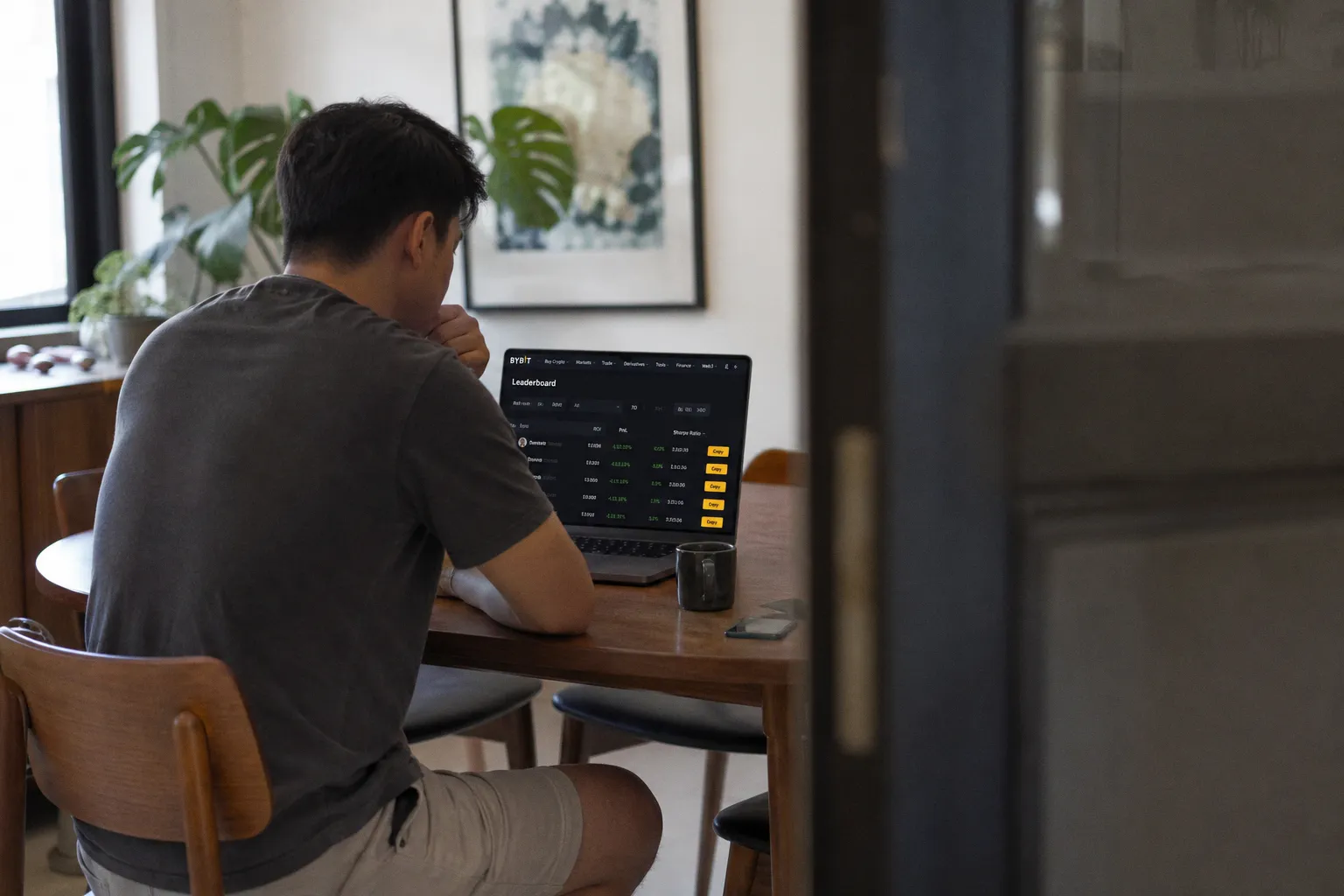
That reporting framework is not perfect. Leaderboards can favor short-term risk-taking if users sort by recent ROI. A trader running high leverage may rank well until the first liquidation cluster. A provider can also benefit from survivorship effects: failed traders disappear, active winners remain visible. Still, a platform leaderboard gives the auditor more data than a Telegram channel that deletes losing calls or posts cropped exchange screenshots.
Leaderboards introduce verifiable metrics, but not certainty
Social trading leaderboards are not truth machines. They are measurement interfaces. Their value depends on what they expose and how difficult the metrics are to manipulate.
The useful fields are not headline ROI alone. ROI without drawdown is incomplete. Win rate without average loss size is noise. Trade count without market regime context is weak. The better read is multidimensional:
1. Maximum drawdown relative to ROI. A trader showing 80% ROI with 70% drawdown is not equivalent to one showing 35% ROI with 12% drawdown. The first profile may be a leverage event waiting for reversal.
2. Trade frequency and holding period. A high-frequency scalper produces different copy outcomes than a swing trader. Followers can receive worse fills on fast entries if liquidity is thin or the copy engine batches orders.
3. Follower asset under copy. Strategy capacity matters. A trader who performed well with a small account may degrade once follower volume increases, especially on lower-liquidity altcoin pairs.
4. Realized versus unrealized profit. A trader can hide risk inside open positions. Closed-trade profit is cleaner than equity inflated by unrealized gains.
5. Stop-loss discipline. The absence of hard exits is a structural warning. In crypto, “manual risk management” often means loss deferral.
Telegram channels rarely provide this measurement stack. Some legitimate providers publish detailed trade logs and post-analysis. Some provide coherent market structure analysis rather than pure entry calls. That is materially better than a channel with only rocket emojis and cropped profit screenshots. But unless the subscriber can reconcile every alert against actual executed orders, the record remains unverifiable.
The key advantage of copy trading is not that the master trader is better. It is that the platform can bind identity, trades, and performance data into one reporting surface.
Past performance is not predictive. But unverifiable performance is not even a dataset.
A useful leaderboard should let the user reject traders quickly. That is the primary function. It should expose enough data to identify excessive leverage, unstable equity curves, short track records, and abnormal concentration. It does not need to prove future edge. It needs to reduce blind allocation.
Manual latency is a hidden cost in Telegram crypto signals
Manual execution introduces latency at three layers: notification delay, human response delay, and exchange interaction delay. Telegram delivery is usually fast enough for ordinary communication. It is not a deterministic trading transport layer.
The actual execution path for a manual signal includes:
- Telegram notification delivery to the device.
- User reads and interprets the alert.
- User opens the exchange app or web terminal.
- Authentication or session refresh completes.
- Pair is selected.
- Margin mode and leverage are checked.
- Order type and size are entered.
- Stop-loss and take-profit are set.
- Order is submitted and matched.
Each step can be clean. Each step can also fail. During a fast move, the posted entry may become stale before the user reaches the order ticket. For market orders, slippage becomes the cost. For limit orders, non-fill becomes the cost. For leveraged positions, a late entry changes the liquidation distance and invalidates the original risk/reward profile.
The research range for manual signal execution is effectively broad: slippage can be negligible, or it can reach the full missed-trade case. In practical terms, that means 0% to 100% of the intended opportunity can be lost through manual delay, especially when the signal depends on a narrow entry range.
Copy trading platforms still have latency. The relevant variables shift:
- API endpoint response time.
- Internal platform routing.
- Server proximity to exchange infrastructure.
- Order batching behavior.
- Liquidity at the copied size.
- Master account order type.
- Follower allocation rules.
- Market volatility during replication.
The difference is that these are system variables, not user-tap variables. They can be logged, benchmarked, and compared. A copier can inspect whether replicated entries are consistently worse than master entries. If average copy slippage expands on specific pairs or during specific sessions, the signal is measurable.
Position sizing is another execution defect
Telegram alerts often describe a trade but leave sizing ambiguous. A channel may say “use low risk” or “3x to 5x leverage,” which is not an allocation model. Subscribers then improvise. One allocates 2% of equity. Another uses 25% of margin. A third compounds after two wins and increases size before the losing trade.
That creates a false read on provider quality. A profitable sequence of signals can still generate losses for subscribers if sizing is inconsistent. A losing sequence can liquidate users who exceed the implied risk budget.
Copy trading systems usually require the follower to define allocation parameters at setup: fixed amount, proportional copy, maximum per trade, or total copy balance. Platform controls differ, but the sizing logic is at least codified. That reduces variance caused by user discretion.
The remaining risk is strategy drift. If a master trader changes from BTC/ETH majors to illiquid altcoin perps, the follower may still be exposed unless platform filters or manual monitoring intervene. Automation removes execution delay. It does not remove oversight.
Telegram channels have an accountability problem
The Telegram signal market has a low barrier to entry. A provider can create a channel, post winning screenshots, sell VIP access, and route users through exchange referrals with minimal verification. This does not prove fraud. It proves weak enforcement.
The highest-risk patterns are easy to identify:
1. No complete trade history. Only winners are posted, or losses disappear into vague “invalidated” language.
2. Screenshots without order identifiers. Cropped PnL images are marketing assets, not execution records.
3. Guaranteed-return language. Any fixed-profit framing in crypto derivatives should be treated as a structural red flag.
4. Aggressive leverage defaults. Signals that normalize 20x, 50x, or higher leverage without position-level risk controls are not robust.
5. Referral-first onboarding. If the channel’s main conversion event is exchange signup rather than performance verification, incentives may be fee-driven.
6. Pump-and-dump mechanics. Thin altcoin calls inside large groups can move price before most subscribers enter. Early wallets benefit; late manual followers provide exit liquidity.
The last point is especially important. A Telegram group can function as both audience and liquidity source. If a provider posts a low-liquidity token to a large subscriber base, the first participants can benefit from the buying pressure caused by later participants. This is not always the intent, but the structure permits it.
Copy trading platforms reduce some of this surface area because trades are tied to account performance and replicated through the system. A master trader cannot easily fabricate a platform-verified equity curve. But platform risk remains. A trader can take excessive risk to climb the leaderboard. A short history can look clean by chance. A strategy can be optimized for visibility rather than durability.
The cleaner comparison is not “Telegram bad, copy trading good.” The cleaner comparison is this: Telegram channels require the user to verify both the signal and the execution. Copy trading platforms at least verify part of the execution record.
Regulation remains incomplete for both models
Crypto signal providers and financial influencers operate in a fragmented accountability environment. In traditional securities markets, investment promotion, adviser status, compensation disclosure, and anti-fraud rules are more clearly defined. In crypto, especially across borders, enforcement is uneven.
Telegram groups are harder to supervise. Operators may be anonymous, offshore, or transient. Paid access can be framed as education. Affiliate compensation may not be clearly disclosed. Historical performance may be unverifiable. In pump-and-dump patterns, the channel can disappear or rebrand faster than subscribers can document losses.
Copy trading platforms are more visible entities. They operate public products, maintain user accounts, and often publish program rules for master traders. That does not make every listed trader regulated as an adviser. It also does not guarantee that platform controls prevent reckless strategies. But platform-based social trading creates a clearer audit trail than a private chat room.
For signal creators, this shift matters commercially. The old model monetized attention: build a channel, sell access, drive referral volume. The newer model monetizes replicable performance: attract copier assets, keep drawdown tolerable, and earn a share of net profits. The creator economy in finance is moving from content distribution toward measured execution.
That movement is not complete. Many “best crypto signal providers” still market through social media, Telegram, Discord, and influencer channels. Many copy trading leaderboards still overemphasize short-term ROI. The user still bears market risk. Losses by the master trader are losses for the copier.
But accountability improves when three records are joined:
- The provider identity or platform account.
- The executed trade history.
- The follower outcome after fees, slippage, and allocation rules.
Telegram usually provides the first two weakly and the third almost never. Copy trading platforms provide all three with varying quality.
Where Telegram signals still have a valid role
Telegram is not obsolete. It is poor as an execution layer, but useful as an information layer.
A strong Telegram channel can provide market commentary, trade rationale, macro context, funding-rate observations, liquidity levels, order-flow notes, and post-trade review. That material can be valuable if the user is not blindly copying entries. The better providers behave less like alert vendors and more like research desks.
Telegram signals are most defensible when:
- The channel publishes full winners and losers, not only profitable exits.
- Entry logic is explained before the trade, not rewritten after it.
- Leverage is conservative or optional.
- The provider separates analysis from execution instructions.
- Affiliate relationships are disclosed clearly.
- The subscriber uses independent risk limits and does not chase stale entries.
In that use case, Telegram becomes a research feed. The subscriber remains the trader. Execution quality depends on the subscriber’s process.
Copy trading is different. The user delegates part of the process to the master trader and the platform. That requires a separate due-diligence model. The question is no longer “Is this signal good?” The question is “Does this trader’s live execution profile justify allocation under my drawdown tolerance?”
Those are different tests.
The technical verdict
For crypto trading signals, Telegram channels and copy trading platforms should not be ranked as two versions of the same product. They solve different parts of the trading stack.
Telegram solves distribution. It broadcasts ideas. It is fast enough for discussion, watchlists, and research commentary. It is structurally weak for time-sensitive entries, position sizing, and verified performance. Its business model often collects revenue through subscriptions or referrals before subscriber profitability is established.
Copy trading solves replication. It routes trades automatically, operates 24/7, and generates platform-level performance data. It is structurally stronger for auditability and execution consistency. Its profit-share model, commonly 5% to 15% of follower net profits, aligns incentives better than fixed access fees. It still carries market risk, trader risk, platform risk, and slippage risk.
The measurable advantage belongs to copy trading when the objective is execution fidelity. The caveat is that automation can replicate bad trades as efficiently as good ones. A low-latency loss is still a loss.
The clean allocation rule is mechanical: use Telegram signals as inputs only when the provider offers complete reasoning and the user controls execution independently. Use copy trading only when the platform exposes enough verified data to evaluate ROI, drawdown, trade history, allocation behavior, and slippage. Reject both when the record cannot be audited.
In this segment, the best provider is not the loudest channel or the highest leaderboard ROI. It is the one whose performance can survive reconciliation against executed trades.