Launching a Forex Brokerage Is Easier Than Ever - Building One That Lasts Is the Real Challenge
The barrier-to-entry data tells one story; the attrition rate at the 18-month mark tells another.

The White-Label Stack Collapsed the Entry Barrier
Turnkey providers now bundle platform, CRM, payments, and compliance modules into a single deployment. That compresses the technical risk surface and cuts the typical 18–36 month build window down to a contract signing. Execution quality, however, remains anchored to the underlying LP and matching engine—which most white-label clients never benchmark directly.
The competitive filters the piece names—execution, operational efficiency, regulatory readiness, UX, multi-market reach—are the right axes. For social-trading desks screening brokers underneath their signal network, the deciding inputs are LP-tier latency, server proximity to colocated matching, and slippage variance during thin-session cross pairs. These stay invisible behind a polished white-label UI until the first volatility spike. Treat them as the first split test, not the last.
PropXBT Extends Its Sim Funnel Past Crypto
PropXBT has added indices and forex pairs to its simulated challenge platform, alongside crypto, commodities, and stocks. Relevant specs from the announcement: challenge sizes $10,000–$200,000, one- and two-stage evaluations with a 10% target on the single-stage track, profit splits up to 95%, leverage capped at 5x, and a hard 10-day position-hold limit with automatic closure.
The pre-trade guardrails are the part that matters for a copy-trading operator looking at PropXBT as a funded-trader pipeline: visible daily loss limits, maximum overall loss limits, and a volume cap that blocks oversized orders before they route. No minimum daily profit requirement and a browser-based interface lower entry friction—but the evaluation rules (drawdown band, profit target, trading-day minimum) are what actually filter participant quality. Worth benchmarking PropXBT pass-through rates against funded-program cohorts before integrating the pipeline into a trader-sourcing workflow.
Adjacent Regulatory Shifts to Log
Two peripheral data points landed in the same window. Invezz published a 2026 ranking of Singapore brokerage accounts (comparison details unavailable in the source). Webull EU received MiCAR authorization from the Dutch Authority for the Financial Markets (AFM), clearing it to offer crypto-asset services across the European Union under the bloc's harmonized framework.
For platforms weighing cross-border distribution, MiCAR is now the baseline cost of EU crypto market entry. The AFM license shortens the licensing runway relative to pre-MiCAR national passporting. Before routing client flows through any social-trading counterparty in the EEA, confirm the same MiCAR registration and check which CASP sub-categories the authorization covers.
The broader operator calculus has not changed: the license and the login screen are cheap. The live components—latency budgets, drawdown-validation pipelines, and regulatory coverage maps—still have to be assembled, tested, and re-tested every quarter. The same logic applies across adjacent digital-asset categories; [hardware surfaces turning into curated display windows for tokenized work] are a reminder that the boundary between trading, collecting, and content distribution is being redrawn at the edges of the stack.
More from the feed
 Reshaping American Finance in July 2026
 YWO Expands Fintech Ecosystem with Launch of New Specialized Partnership Programs
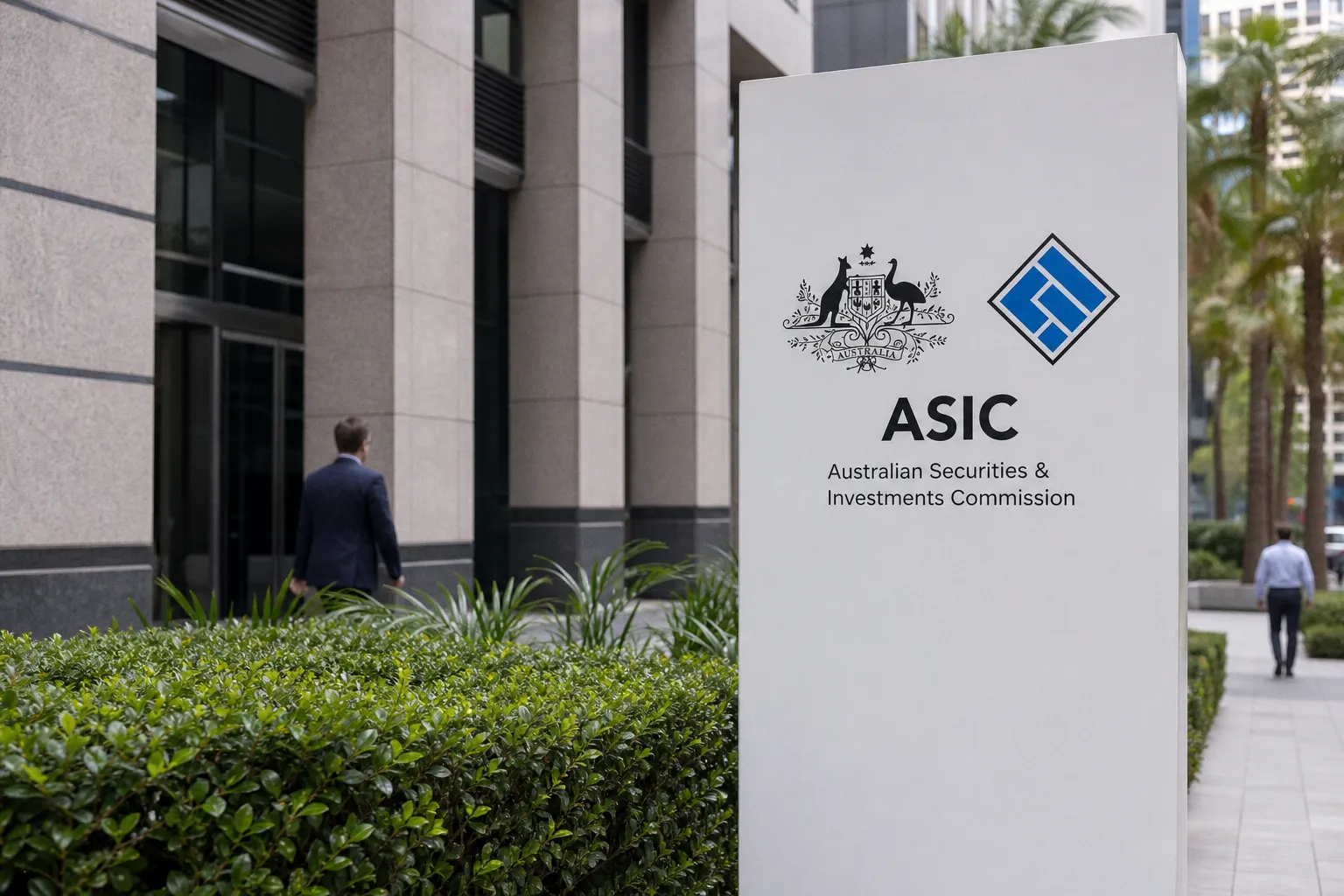 ASIC Sets Retail CFD Levy 23% Lower for 2025-26 as Total Industry Bill Climbs to A$400 Million
 Aureon Trading Institute (ATI) Unveils Comprehensive Fintech Ecosystem Driven by the ATI Token